Trailer Theft: Protecting Plant Trailers, Tippers and Box Trailers
8 October 2026 · 6 min read
Most security thinking goes into the things with engines. The van gets an alarm, the excavator gets a tracker, the tools get tagged. The trailer they all depend on gets a hitch lock from a motor factor, if that.
Which is awkward, because a trailer is the single easiest valuable item on most yards to steal. There is no ignition to defeat, no immobiliser to bypass, and no need to start anything. Someone reverses up, drops a coupling on the ball, and drives away — and from a distance it looks exactly like a man collecting his own trailer.
Why trailers are a harder problem than plant
Three things make them different, and they compound.
- Theft takes under a minute and needs no skill. A machine has to be loaded; a trailer is already on wheels and already designed to be towed by a stranger's vehicle.
- Most trailers are not registered to anyone. There is no V5, no logbook, and often no document connecting the trailer to you at all. Ownership is a question of what you can evidence, not what you can look up.
- There is no onboard power. A plant tracker can be wired into a machine's battery; a trailer usually offers nothing to wire into, which rules out the hardware most people reach for first.
The last one matters more than it sounds. It is the reason so many trailers end up with no tracking at all — the obvious product does not fit the problem.
Make it awkward first
Tracking is what you fall back on. Physical delay is what stops it happening, and on a trailer the measures are cheap relative to what they protect.
- A proper hitch lock, rated and fitted. The cheap universal ones are a visual deterrent and little more. A trailer-specific lock that fully encloses the coupling is a different proposition and takes real time and noise to defeat.
- A wheel clamp as the second layer. The combination is what works: a hitch lock means it cannot be towed, a clamp means it cannot be rolled onto a recovery truck without effort.
- Park it so it cannot leave. Nose-in against a wall, blocked in by a vehicle, or with the drawbar against something solid. Geometry is free and it beats a lock that can be ground off.
- Take the wheels off if it is laid up. A trailer not needed for a fortnight and sitting on axle stands in a locked yard is not a theft target. This is the measure nobody bothers with and the one that genuinely works.
Tip — Photograph your trailers now — plate, chassis number, any damage, the inside of the body — and keep it with the purchase invoice. Without a V5, those photographs are the ownership evidence, and the time to take them is before you need them.
Identification: the part that decides whether you get it back
Recovered trailers go unclaimed regularly, because nobody can prove whose they are. Even when the police find one, the question is immediately whether it is yours and whether it is the one reported.
So the chassis or serial number goes in the asset register, visibly and in a photograph. Mark the trailer in more than one place, including somewhere a thief will not think to check — inside a box section, under the floor, behind the mudguard. A single marking on the drawbar is the first thing to be ground off. The general approach is the same one we set out for [marking tools and keeping an insurance-grade register](/blog/tool-marking-asset-register-insurance-uk).
If a trailer is on hire or belongs to a subcontractor, the ownership question gets more complicated rather than less, and we have been through that in [tracking hired plant and subbie kit](/blog/tracking-hired-plant-subcontractor-kit-uk).
Tracking something with no power supply
This is where trailers need a different answer from vans and machines. With nothing to wire into, the tag has to carry its own battery, and that forces a straightforward trade-off between how often it reports and how long it lasts.
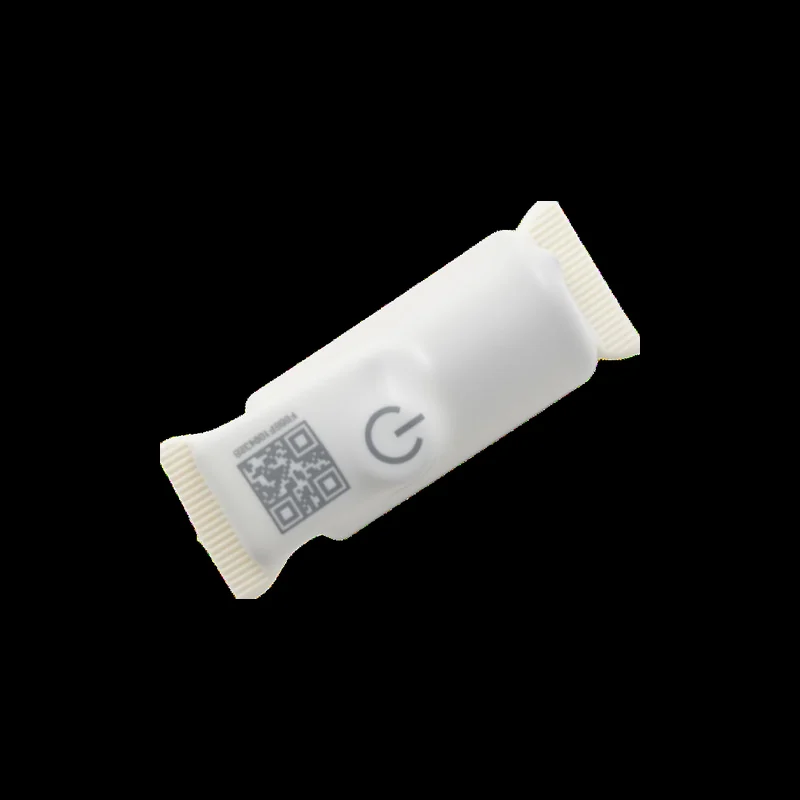
A self-powered 4G GPS tracker reports its own position on a schedule, anywhere there is mobile coverage. It is the right choice for a high-value trailer, and the thing to be realistic about is the reporting interval: frequent updates and long battery life are opposite ends of the same setting. For a trailer that sits still most of the time, a tag that wakes on movement rather than reporting continuously is usually the sensible configuration.
A BLE crowd-located tag has no GPS of its own and is spotted when it passes other devices. It costs a fraction as much, runs for a long time on a small cell, and is small enough to conceal properly — but it only tells you anything when the trailer passes something that can see it. On a trailer towed on public roads that happens more than people expect; in a sealed container or a remote barn it does not. We compare the two properly in [BLE crowd tags vs 4G GPS trackers](/blog/ble-crowd-tags-vs-4g-gps-trackers-tools-plant-uk).
The pragmatic answer on a yard full of trailers is usually not one or the other. Put a 4G tracker on the two or three trailers you could least afford to lose, and a cheap concealed tag on everything else. The expensive hardware goes where the value is; the cheap tags make sure the rest are not invisible.
Where to put it
The rule is the same as for plant and vans: somewhere that is not where a thief would look, not findable in two minutes, and not somewhere the tag will be destroyed by water or vibration.
- Inside a sealed box section or chassis member, where there is one that is genuinely accessible to you and not to anyone else.
- Under the floor of a box or tipper body, rather than in the obvious cavity behind the drawbar.
- Not in the toolbox or the jockey wheel housing. Both are opened as a matter of routine.
- Not anywhere that blocks a metal enclosure's view of the sky if you are relying on GPS — a tag buried in a steel box will struggle, which is a genuine tension with hiding it well.
We have gone through the general version of this, including the mistakes that give a tracker away, in [where to hide a tracker](/blog/where-to-hide-a-tracker-tools-vans-plant-uk).
If one goes
Report it quickly and give the police something to work with: the chassis number, the photographs, the register entry, and the tracking history rather than a screenshot of a map. Do not go and retrieve it yourself — a yard you do not know, at night, over a trailer, is not a sensible trade.
How to hand location data over in a form that is actually usable is covered in [sharing tracking with the police](/blog/share-tracking-with-police), and the wider first-hour sequence in [what to do after a theft](/blog/track-tools-after-theft).
The short version
A trailer is stolen in seconds, carries no registration to prove it was yours, and offers no power to run a tracker. Fix those in order: make it physically awkward with a hitch lock and a clamp and where you park it, make it identifiable with marked numbers and photographs held off the yard, and make it findable with a self-powered tag chosen honestly against how the trailer is actually used.
The alert is worth more than the history
One last point, because it changes what you should set up rather than what you should buy. A tracker that tells you where a trailer went is useful after the event. A tracker that tells you it is moving at all is useful during it.
Draw a zone around where the trailer normally sits and have any movement out of it raise an alert, day or night. On a trailer that is parked up between uses, that is a very clean signal — it does not move by itself, so movement is either you or a problem, and you know which. That is the difference between finding out at seven the next morning and finding out while it is still on the road.
If you want help working out which trailers justify a 4G tracker and which just need a cheap concealed tag, that is the conversation we have with most yards. Our [trailer and caravan tracking](/trailer-tracking) page covers the tow-away alerts and the live recovery link, and the [plant and machinery tracking guide](/blog/plant-machinery-tracking-uk-guide) covers the rest of the fleet alongside it.
Frequently asked questions
Can you put a tracker on a trailer with no electrics?
Yes — it has to be a self-powered tag with its own battery rather than a hard-wired unit. The trade-off is between reporting frequency and battery life, so for a trailer that sits still most of the time a tag that wakes on movement is usually a better configuration than one reporting continuously.
Do I need a 4G tracker or will a BLE tag do?
It depends on value and use. A 4G GPS tracker reports its own position anywhere there is mobile coverage and suits a high-value trailer. A BLE crowd-located tag is far cheaper, smaller and longer-lived, but only reports when it passes other devices — good on public roads, poor in a sealed container or a remote barn. Many yards run 4G on the few trailers they could least afford to lose and cheap tags on the rest.
How do I prove a recovered trailer is mine without a V5?
Most trailers have no registration document, so ownership rests on what you recorded beforehand: the chassis or serial number in an asset register, photographs of the plate, the number and any distinguishing damage, markings in more than one concealed location, and the original purchase invoice. Recovered trailers go unclaimed regularly for want of exactly this.
What is the single most effective anti-theft measure for a trailer?
Where you park it, closely followed by a proper trailer-specific hitch lock used together with a wheel clamp. A trailer parked nose-in against a wall or blocked in by a vehicle cannot be hitched and towed regardless of what locks are fitted, and geometry costs nothing.
Make your tools findable
Tag your kit with SpacePaper, keep an insurance-ready register, and share live tracking with the police — all from one app.